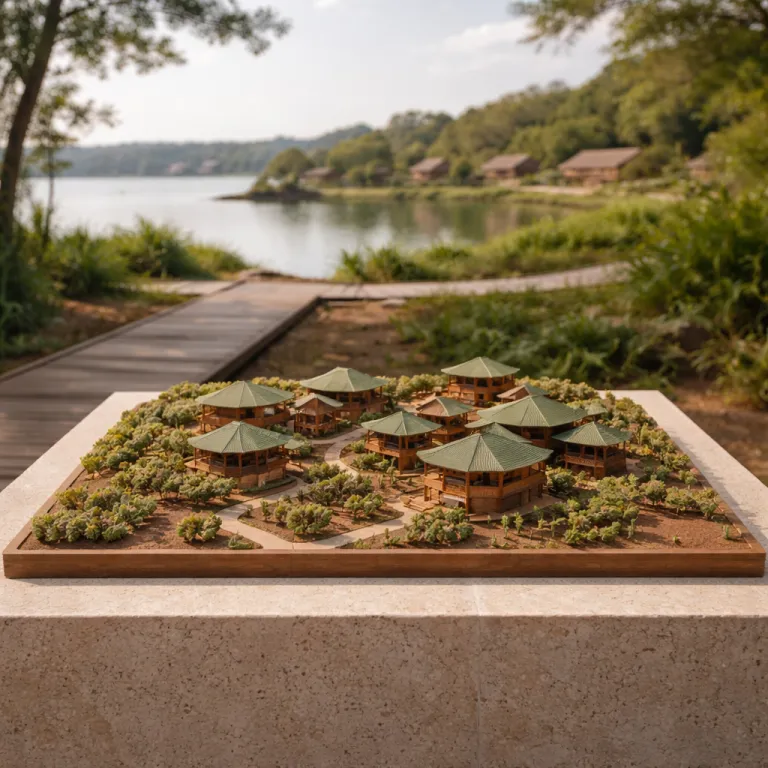
Felege Gion eco resort Bahir Dar: a 4.5 billion birr statement on Lake Tana
Felege Gion Eco Resort Bahir Dar is the largest single eco resort investment yet on the southern shores of Lake Tana. Built over roughly two and a half years with a reported 4.5 billion birr budget[1], the Felege Gion project signals that Bahir Dar is stepping into the same premium tourism conversation that once centred almost exclusively on Addis Ababa. For travellers, this means a new level of hotel choice in northern Ethiopia, where lake, city and Blue Nile landscapes now meet modern hospitality standards and large scale, master planned resort design.
The resort sits just outside central Bahir Dar, on a stretch of lakefront that has long been a tourism destination but rarely a truly international one. Where the historic Tana Hotel once defined the Tana corridor, Felege Gion now brings a contemporary eco tourism narrative, with guest houses, an amphitheatre, retail spaces and a small port with five boats, each carrying up to 30 passengers[1]. These facilities are designed to serve both leisure and business guests, from regional conferences to executive retreats that pair meetings with private Lake Tana cruises and curated monastery visits.
At the inauguration in 2024[1], Deputy Prime Minister Temesgen Tiruneh positioned the eco resort as a major economic lever for Ethiopia’s north, describing it as a project that “turns Lake Tana into a competitive tourism hub for our country.” BEAEKA Trade and Investment, the developer, has framed Felege Gion as a long term anchor for the Tana corridor, while Roda Hospitality Group has publicly committed to “raising service benchmarks on Lake Tana in line with Ethiopia’s wider tourism strategy”[2]. For travellers reading this news as they plan a stay in Bahir Dar, the message is clear: the government wants Lake Tana and the wider Tana corridor to compete with Africa’s better known waterfront destinations, while still keeping pricing and access within reach for domestic visitors.
What 4.5 billion birr builds: facilities, service standards and the Roda strategy
Behind the scenes, the Felege Gion story is as much about management as it is about architecture. Roda Hospitality Group, already operating Gorgora Eco Resort on the northern shore of Lake Tana, now runs this new Gion eco property in Bahir Dar, creating a dual resort network on Ethiopia’s largest lake[2]. For travellers, that means a better chance of consistent service standards, from reservation handling to on the ground eco tourism experiences that actually respect the lake and its monasteries, rather than treating them as quick photo stops.
The physical facilities at Felege Gion Eco Resort Bahir Dar are deliberately mixed use, reflecting both tourism and business demand. Modern guest houses line the lakefront, while an amphitheatre and entertainment venues are designed for cultural performances, conferences and major corporate events that previously defaulted to Addis Ababa. Shops, landscaped promenades and riverfront infrastructure extend the experience beyond a standard hotel stay, turning the resort into a walkable lakeside district rather than a gated compound. Early reports indicate a room inventory in the low hundreds, with rates expected to sit in the upper mid range to lower luxury bracket for Ethiopia, though official pricing, confirmed room count and detailed sustainability certifications had not yet been widely published at the time of writing.
This is also where the Dine for Generations initiative becomes tangible for premium tourism travellers. Like Haro Dandi Lodge and Denbi Eco Lodge, which we have analysed in depth in our review of what Ethiopia’s newest Dine for Generations flagships actually deliver, Felege Gion is built with sustainable materials, local labour and a clear eco brief[2]. The resort’s port infrastructure supports Lake Tana excursions towards the Blue Nile outlet, while its economic footprint is designed to keep more value in Bahir Dar rather than leaking entirely to international chains. Travellers should, however, be aware that “eco” is still a broad label here: independent audits, third party green certifications and transparent reporting on water, energy and waste management have not yet been fully disclosed, so claims should be read as intentions rather than verified performance.
Beyond Addis Ababa: how Felege Gion reshapes northern Ethiopia’s luxury map
For years, high end travellers to Ethiopia routed their nights through Addis Ababa, then treated Bahir Dar as a short stop between Lalibela and Gondar. With Felege Gion Eco Resort Bahir Dar now open, and a Four Points by Sheraton rising in the city[3], the Tana corridor is finally positioned as a stay longer base rather than a quick Lake Tana excursion. This shift matters for both eco tourism and business travel, because it anchors premium tourism infrastructure directly on the water, not only in the capital, and encourages multi night itineraries that include both cultural and nature based experiences.
Compared with Addis Ababa’s established hotel supply, Felege Gion and the parallel Ghion eco and Gorgora properties offer something the city cannot match: immediate access to lake, forest and monastery islands within minutes of your room. Our broader analysis of outside Addis lake lodges and mountain retreats shows a clear pattern, where travellers increasingly trade skyline views for water and highland light. In that context, the inaugurated Felege Gion Eco Resort becomes a flagship for a new generation of lake based stays that still meet international expectations for Wi-Fi, meeting rooms and discreet service, even if some soft opening teething issues around staffing depth and activity programming are likely in the first season.
There is also a pricing story that matters for executives extending business trips into leisure. As we argued in our report on why Ethiopia’s eco lodge generation will outlast the COP hotel boom, eco properties with serious capital behind them tend to stabilise rates while lifting quality. A 4.5 billion birr investment backed by BEAEKA Trade and Investment and managed by Roda Hospitality Group[2] sends a signal to both domestic and international travellers that Bahir Dar is no longer a secondary stop, but a primary tourism destination in Africa’s oldest independent nation. The real test will be whether year round occupancy, transparent pricing and consistent service can match the ambition of the build.
Key practical notes for travellers
Felege Gion Eco Resort Bahir Dar is reached via Bahir Dar Airport, with a transfer of roughly 15 to 20 minutes depending on traffic. The resort is best visited during the dry season, when Lake Tana waters are calmer and boat access to the Blue Nile outlet and island monasteries is more reliable. Local guides are available for lake tours, and the resort’s own boats can be chartered for private or small group excursions. Until direct online booking and clear contact channels are fully standardised, travellers may find it easier to reserve through Ethiopian tour operators or established travel agencies that already work with Roda Hospitality Group properties.
Sources and further reading
- Addis Insight – coverage of the inauguration of Felege Gion Eco Resort, including opening year, quoted remarks from Deputy Prime Minister Temesgen Tiruneh and its role in Ethiopia’s tourism strategy.[1]
- Ethio Diaspora Hub – analysis of the 4.5 billion birr investment, construction timeline, BEAEKA Trade and Investment’s role as developer, and on-the-record comments from Roda Hospitality Group on service standards and eco priorities.[2]
- Fana Broadcasting Corporate – reporting on Lake Tana’s tourism potential, infrastructure developments around Bahir Dar, the planned Four Points by Sheraton and the broader positioning of the Tana corridor within northern Ethiopia’s travel map.[3]