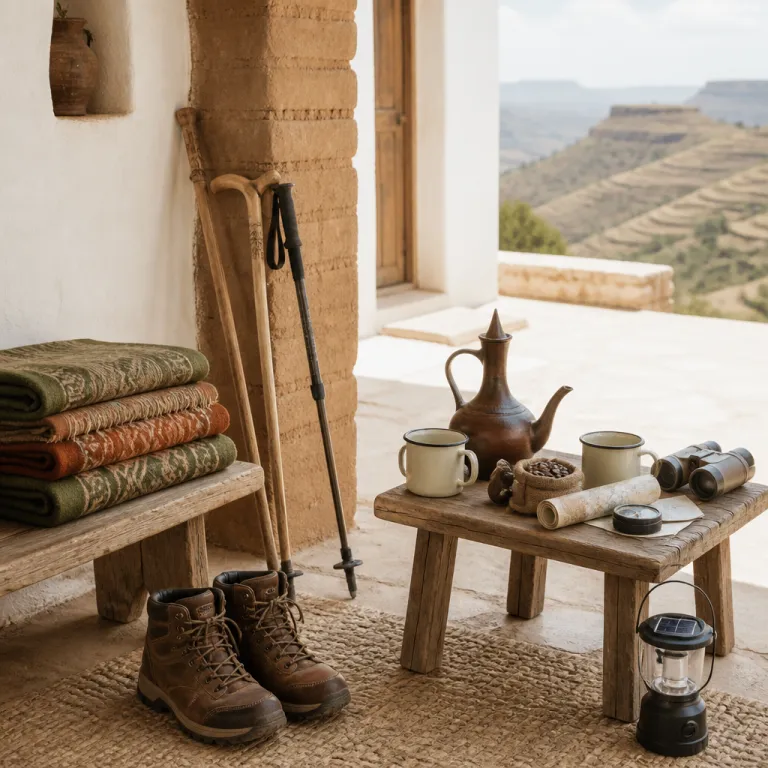
Why Ethiopia’s highland trekking lodges are changing the way we walk
Ethiopia sits on a vast volcanic plateau, with much of the country above 2,500 m. That altitude shapes every aspect of the new generation of Ethiopia highland trekking lodges, from how you move along the escarpments by day to how you warm up by the fire at night. For travelers used to camping and mule trains, sleeping in a carefully run mountain lodge with a real mattress and hot shower changes the entire trekking Ethiopia experience.
The Simien Mountains and Bale Mountains are at the heart of this shift, where lodges now anchor multi day routes through some of Africa’s most dramatic mountains. In the Simien Mountains National Park, stone and glass properties such as Limalimo Lodge and the higher Simien Lodge let you explore cliff edge trails by day and return to a base comfortable enough for long conversations over traditional Ethiopian coffee. In Bale Mountains National Park, a forested mountain lodge base turns wildlife focused trekking into a softer, more reflective trip rather than a hard expedition.
Specialist trekking operators and local guides have been early partners in this move from tents to rooms, working closely with each community to design routes that still feel wild. Their itineraries link community trekking homestays, simple church guesthouses and design forward lodges into one coherent journey across the highland landscapes. As one Simien guide put it after a long day on the escarpment, “We still walk the same paths my grandfather used, but now guests arrive at the fire with warm feet and clear heads, ready to listen to the mountains.” For discerning travelers, that means you can plan a trekking Ethiopia itinerary that respects history and culture while still expecting hot water, good linen and a considered glass of wine at altitude.

The Simien Mountains: from cliff edge trails to fireside comfort
The Simien Mountains rise to 4,550 m at Ras Dashen, making this national park one of the highest trekking areas in Africa. Here, the pairing of day long trekking and highland lodges has matured fastest, with Limalimo Lodge and Simien Lodge forming the backbone of many premium itineraries. Both sit within easy reach of classic Simien Mountains viewpoints, where gelada monkeys graze on the escarpment edge and lammergeiers ride the thermals above sheer mountain walls.
Limalimo Lodge lies at around 3,200 m, a low slung stone and glass lodge comfortable enough for guests who want design, silence and long views across the mountains. Simien Lodge, often described as the highest hotel in Africa at roughly 3,260 m near Debark, feels more atmospheric than polished but is steadily being upgraded to meet modern expectations. Between the two, you can plan a Simien focused trip that balances serious trekking Ethiopia routes with slow mornings, good coffee and time to absorb the park’s wildlife and geology.
From Addis Ababa, most travelers fly about one hour to Gondar then drive three to four hours into the Simien Mountains National Park, using a guide and vehicle arranged through a specialist operator or local agency. Park regulations require a licensed guide and a scout for most routes, and entrance fees are usually paid at the park office in Debark before you continue to the trailhead or lodge. A typical three day Simien circuit might cover 8–12 km of walking per day (three to six hours including stops), with one night at Limalimo Lodge and one at Simien Lodge to experience both sides of the escarpment.
Bale Mountains, Lalibela and Tigray: quieter highlands and rock hewn sanctuaries
South of Addis, the Bale Mountains offer a very different highland experience, with cloud forest, alpine moorland and one of the best chances to see Ethiopian wolves. Bale Mountain Lodge sits at around 2,380 m in a forested valley, acting as a mountain lodge base for day hikes onto the Sanetti Plateau and into Harenna Forest. Trekkers here trade sheer cliffs for mist, giant lobelias and some of the richest birdlife in Ethiopia.
To the north, Lalibela and the wider highlands around the Abune Yosef massif combine history, culture and altitude in a way few destinations can match. Abune Yosef Eco Lodge, reached by a half day trek from the town at roughly 3,300 m, is a community trekking project that channels income directly into the surrounding community while giving trekkers a lodge comfortable enough for multi night stays. From this base, you can plan a trekking Ethiopia itinerary that includes the rock hewn churches Lalibela is famous for, then continue on foot to high meadows where gelada monkeys and endemic wildlife graze.
Further north again, the Tigray region and its rock hewn churches carved into sandstone cliffs are reached only by steep trails, ladders and narrow ledges. Simple church adjacent guesthouses and small lodges such as those used by regional trekking outfits are not luxury in the classic sense, yet the combination of history culture, mountain silence and candlelit evenings feels rare. A four day loop might include one night in Lalibela, a trek of 10–14 km to Abune Yosef Eco Lodge, a second day walking 6–10 km between highland villages, then a final day descending to town for a last visit to the churches before onward travel.
Highland hospitality: coffee ceremonies, community trekking and life at altitude
What sets Ethiopia highland trekking lodges apart is not only their location but the way Ethiopian hospitality is expressed at 3,000 m. After a long trek, you are as likely to be invited into a traditional Ethiopian coffee ceremony as handed a drinks list, with beans roasted over coals while your guide explains which community grew them. That ritual, often accompanied by fresh injera and a simple wot stew, anchors the day’s travel in something deeper than scenery.
Community trekking projects around Lalibela, Abune Yosef and the Tigray region have made this even more tangible, with local families hosting trekkers in homestays or working in lodge kitchens and guiding teams. Operators and community associations design each itinerary to pass through villages where tourism income supports schools, trail maintenance and conservation of rock hewn churches. In the Southern Highlands, Dorze Lodge near the Omo Valley offers another expression of traditional Ethiopian hospitality, with woven bamboo houses, weaving demonstrations and views across layered mountain ridges.
Evenings in the Simien Mountains or Bale Mountains tend to follow a similar rhythm, whether you are at Limalimo Lodge, Simien Lodge, Bale Mountain Lodge or a simpler mountain lodge. Guests gather around a fireplace, guides outline the next day’s trek and someone inevitably pulls out a map to trace the national park boundaries and the mountains national peaks. One guest at Bale Mountain Lodge described it simply: “By the time the fire dies down, you know every contour of the plateau and the names of half the stars above it.” For travelers interested in how coffee, conservation and tourism intersect in Ethiopia, this analysis of Ethiopia’s coffee harvest and origin tourism offers useful context before you step into your first highland coffee ceremony.
Planning your itinerary: best time, altitude, booking and multi lodge circuits
Designing a highland trekking itinerary in Ethiopia starts with timing and altitude, because both shape how your body and your days will feel. Local authorities are clear that “October to March offers favorable weather”, which aligns with the driest months in the Simien Mountains and Bale Mountains. That said, the so called green season from roughly July to September can be rewarding for experienced trekkers who do not mind afternoon showers, as the highlands turn lush and waterfalls in every national park reach their peak.
Altitude deserves respect, especially if you fly straight from Addis Ababa at about 2,355 m to lodges above 3,000 m in the Simien Mountains. Plan at least one easy day on arrival, keep your first trek short and hydrate more than you think necessary to enjoy your Ethiopia highland trekking lodges without headaches. Packing layers, a warm hat, gloves and a waterproof shell is essential, because temperatures can drop close to freezing at night even when the day feels warm on a sunlit mountain ridge.
When it comes to booking, you can reserve most lodges directly or through specialist operators who bundle transfers, guides and park fees into one contract. Limalimo Lodge, Simien Lodge, Bale Mountain Lodge, Abune Yosef Eco Lodge and Dorze Lodge all work with local guides and community partners, so asking about community trekking options when you book helps spread income along the trail. For complex trips that combine Addis, Lalibela, the Simien Mountains, the Bale Mountains and perhaps the Omo Valley or Tigray region, a trusted operator can stitch everything into a coherent, unhurried trip that leaves space for both history and wildlife.
Hidden highland gems: beyond the headline lodges
Once you have anchored your Ethiopia itinerary around the major lodges, there is room to weave in lesser known highland stays that deepen the experience. Around Lalibela, small community run guesthouses on the way to Abune Yosef allow you to trek between villages, waking to church bells and views over layered mountain ranges. In the Tigray region, basic but atmospheric church guesthouses near rock hewn sanctuaries turn a day hike into an overnight vigil, with stars, silence and a strong sense of history culture.
In the Southern Highlands, Dorze Lodge offers a different angle on trekking Ethiopia, with walks between Dorze villages, enset plantations and viewpoints over the Rift Valley lakes. Here, the focus is less on national park wildlife and more on traditional Ethiopian weaving, music and the rhythms of highland farming communities. For travelers who have already walked the Simien Mountains and Bale Mountains, these quieter corners of Ethiopia can feel like a return to the essence of mountain travel.
Operators such as Highland Eco Trekking Tours Ethiopia and Gheralta Adventures are well placed to suggest these hidden gems, because they work closely with each community and understand which trails suit which level of trek experience. A five day highland circuit might link Addis Ababa, Gondar, two nights in the Simien Mountains, a night in Lalibela and a final night in a community lodge, with daily walks of 6–12 km and a mix of lodge comfort and simple village stays. Used well, Ethiopia highland trekking lodges become not just places to sleep but anchors for a journey that moves between wildlife, rock hewn churches, living culture and the quiet of the high plateau.
FAQ: highland trekking lodges in Ethiopia
What is the best time to stay in Ethiopia’s highland trekking lodges ?
The clearest skies and driest trails usually fall between October and March, which many operators regard as the best time for trekking Ethiopia. During these months, routes in the Simien Mountains and Bale Mountains are more predictable, and wildlife such as gelada monkeys and Ethiopian wolves is easier to observe. The green season can still be rewarding, but expect heavier rain, muddier paths and fewer fellow trekkers on the mountain.
Are highland treks in Ethiopia suitable for beginners ?
Some treks are beginner friendly, while others require prior high altitude experience and strong fitness. Shorter day hikes from Limalimo Lodge, Simien Lodge or Bale Mountain Lodge can work for first time trekkers who acclimatize properly and walk with a guide. Multi day community trekking routes around Abune Yosef or in the Tigray region involve longer ascents and basic accommodation, so they suit confident walkers comfortable with simple conditions.
What wildlife can I expect to see near the lodges ?
In the Simien Mountains National Park, guests regularly see large troops of gelada monkeys, Walia ibex on cliffs and impressive raptors circling above the escarpment. Bale Mountains National Park is one of the best places in Ethiopia to look for Ethiopian wolves on the Sanetti Plateau, along with endemic birds in the Harenna Forest. Around Lalibela and Abune Yosef, wildlife encounters are more subtle, with highland birds, small mammals and livestock forming part of the cultural landscape.
How should I prepare for altitude in Ethiopia’s highlands ?
Most Ethiopia highland trekking lodges sit between 2,300 m and 3,300 m, so altitude acclimatization matters. Plan at least one gentle day on arrival, avoid rushing straight into a demanding trek and drink plenty of water to reduce the risk of headaches or fatigue. If you have a history of altitude issues, speak with a medical professional before your trip and share any concerns with your guide once in the mountains.
Is it better to book directly with lodges or through an operator ?
Booking directly with a mountain lodge can work well for simple stays focused on one area, such as a few nights at Limalimo Lodge or Bale Mountain Lodge. For more complex itineraries that combine Addis Ababa, the Simien Mountains, Bale Mountains, Lalibela, the Tigray region or the Omo Valley, a specialist operator can coordinate flights, transfers, guides and park permits. Either way, asking how your stay supports the local community and conservation helps ensure your travel spend benefits the landscapes you have come to explore.