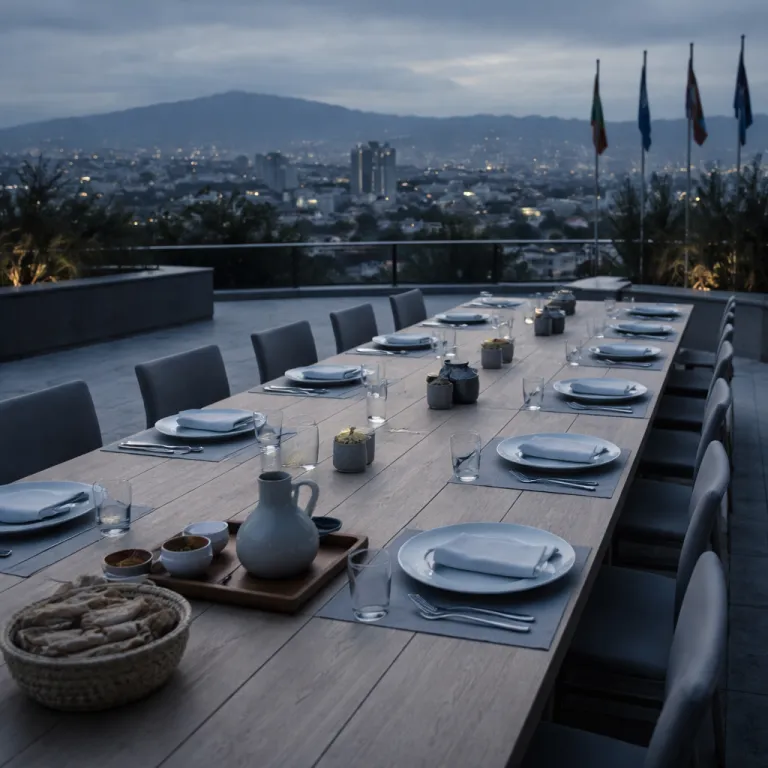
The coming stress test for Addis Ababa fine dining
Addis Ababa is about to learn what happens when a slow food civilisation meets a fast moving summit calendar. As COP32 brings more than 80,000 delegates into the city, the pressure on addis ababa fine dining will not just be about capacity but about whether the restaurants can protect traditional depth while serving international expectations at scale. For business travellers extending a stay into leisure, this is the moment when choosing the right restaurant in addis becomes as strategic as choosing the right hotel.
The city has roughly 20 fine dining restaurants, and in addis ababa those restaurants already juggle diplomatic dinners, corporate events and weddings before a single climate delegate lands. When you add the Ethiopian Orthodox fasting calendar, where many traditional venues default to vegan menus on Wednesdays and Fridays, the tension between authentic ethiopian food and global conference buffets becomes very real. Injera batter ferments for days, a classic ethiopian doro wat chicken stew simmers for hours, and a full coffee ceremony can stretch to 90 minutes, so the rhythm of ethiopian cuisine simply does not obey the quick turnover logic of a convention centre.
This is why the next few years will define what addis upscale dining really means in east africa. Some of the best restaurants will lean into speed and international familiarity, while others will double down on local ingredients, slow braises and the kind of traditional ethiopian hospitality that treats every dinner as a cultural experience rather than a time slot. As a guest, your choices signal which future you want to fund with every dish you order in the city.
Where hotel dining meets conference reality
At the top of the hotel dining hierarchy, Sheraton Addis still sets a benchmark for polished service and global menus. Its flagship Italian venue Stagioni can move high volumes of dinner covers while keeping a recognisable fine dining structure, which makes it attractive for delegations that want predictability more than local food nuance. Yet even here, the smartest chefs are quietly threading ethiopian cuisine into the experience, pairing imported wines with a refined doro wat or a reimagined chicken stew that nods to home kitchens in addis ababa.
Hyatt Regency’s Oriental restaurant plays a different card, leaning into pan Asian comfort that reassures jet lagged executives who are not yet ready for berbere heat. For many conference planners, these hotel restaurants feel like the safest option because they can guarantee timing, seating and audio setups for live speeches or soft background music. The risk is that the city becomes a blur of interchangeable dining rooms, and guests leave thinking they have seen the best of addis when they have barely tasted its local ingredients.
Standalone venues are already challenging that pattern. Lucy in Bole, for example, has become a reference point for how a restaurant in the city can serve both international and ethiopian food without diluting either, and it will likely be fully blocked for high level nights during COP32. If you want a table at the best restaurants during that period, you will need to think like a diplomat and reserve weeks ahead, especially for any dinner that involves live music or a curated cultural experience.
Chefs who refuse to compromise on Ethiopian depth
The most interesting story in addis ababa fine dining is not about imported truffles but about chefs who are defending the four corner plate. In many traditional ethiopian households, a shared injera hosts a variety traditional stews, from lentils to lamb, each corner carrying a different dish that tells part of the story of the city and its highlands. The chefs who insist on keeping that structure, even in white tablecloth dining rooms, are the ones quietly redefining luxury in addis.
Henom Restaurant is a case in point, blending traditional ethiopian fare with international technique without losing the soul of ethiopian cuisine. You might find a slow cooked chicken stew that respects the logic of doro wat but arrives with a lighter clarified butter or a more restrained chilli profile for global palates. Yet the restaurant still sources local ingredients from farmers around addis ababa, keeping the flavour of local food firmly rooted in the surrounding highlands rather than in an anonymous supply chain.
The Alchemist, another name that serious diners in ababa now track, takes a more experimental route while staying loyal to the idea that ethiopian food should lead the conversation. Here, a classic ethiopian spice mix might appear in a sauce for grilled fish, or a coffee reduction might anchor a savoury course, but the reference points remain recognisably addis. For business travellers used to global fusion, this is where the city shows that it can match any east africa capital in creativity while still tasting unmistakably like itself.
The diaspora influence and the Marcus question
Across the city, a new chef class is emerging, many of them diaspora returnees who trained in Europe, North America or the Gulf. They come back to addis with a precise understanding of what international guests expect from fine dining, but they are also fiercely protective of the culture that shaped their first memories of injera and coffee. The unspoken benchmark for many of them is marcus samuelsson, whose global profile has turned marcus addis into shorthand for what a modern Ethiopian restaurant could be if it had the right stage.
There is no confirmed dinner marcus residency in addis ababa yet, and any talk of a dedicated marcus addis project remains speculative, so serious travellers should focus on the chefs already cooking rather than on rumours. Still, the influence is clear when you see how tasting menus in some of the best restaurants move from raw kitfo tartare to a reworked chicken stew, then close with a dessert built around the flavours of the coffee ceremony. In this sense, the city is not waiting for a single star name but building a network of restaurants that can stand beside any marcus samuelsson project in east africa on their own terms.
If you want to understand how this plays out beyond the capital, pair your addis dinners with a journey into the highlands, where lodge kitchens are starting to echo the same confidence. Our guide to refined stays in the Ethiopian highlands shows how chefs from Lalibela to the Bale Mountains are rethinking local ingredients with the same ambition you see in the city. The through line is clear, and it starts with a refusal to treat ethiopian cuisine as a side show to imported menus.
Where to eat: from skyline lounges to culture rich dining rooms
For a business leisure traveller, the question is not whether addis ababa fine dining exists but how to navigate it with limited nights. Start with your priorities : do you want skyline views, a deep dive into traditional ethiopian flavours, or a night that blends live music with a polished dinner service. Once you are clear on that, you can match each night in the city to a specific restaurant rather than hoping the hotel concierge will guess your taste.
Velvet Restaurant & Lounge offers one of the most atmospheric rooftop settings in addis, with a terrace that looks across the city lights and towards the newest towers, including the tallest building projects reshaping the skyline. Here, the draw is as much the lounge energy and curated music as the food, which leans toward international comfort with ethiopian touches. It is a perfect first night venue when you want to feel the pulse of ababa without committing yet to a full cultural experience over injera.
Little Paris Restaurant, by contrast, plays to guests who want a more classic white tablecloth setting with panoramic views of addis ababa and a menu that moves confidently between French technique and ethiopian food references. A well executed doro wat reduction might appear under a roasted chicken breast, or a side of injera could accompany a slow cooked lamb dish, reminding you that you are still in east africa even as the wine list reads like a European brasserie. For many executives, this balance between familiarity and local food nuance makes it one of the best restaurants for client dinners.
Immersive nights: when dinner becomes performance
If you want your addis upscale evening to feel like a curated show, look to venues that integrate live music and dance into the dining room. Gorgeous Restaurant and Palace Court Mediterranean Cuisine both understand that for many visitors, the first taste of ethiopian cuisine should come with azmari songs, shoulder shaking dance music and a sense that the whole city has squeezed into one room. These are the places where a variety traditional stews arrive on a shared injera while the band moves from classic ethiopian standards to pan African rhythms.
At these restaurants, a typical night might begin with a round of local ingredients driven appetisers, move into a generous platter of ethiopian food centred on doro wat and other chicken stew variations, then close with a coffee ceremony performed tableside. The live music is not background noise but part of the choreography, with servers timing the arrival of each dish to the rise and fall of the set. For travellers used to more restrained hotel dining rooms, this can feel like stepping into the living culture of addis rather than observing it from a distance.
To understand why this matters, look at how the coffee ritual is being recognised as intangible heritage and how hotels are adapting. Our feature on what authenticity now means at your hotel coffee ceremony explains why a rushed espresso in the lobby will never match a full ceremony after dinner. In the context of addis ababa, the restaurants that protect this pace, even under COP32 pressure, will be the ones that define luxury for the next decade.
How to book, when to eat and where luxury will move next
Planning your addis ababa fine dining schedule from a hotel room desk requires the same precision you bring to a board meeting. Start by mapping your conference or meeting agenda, then block specific nights for the restaurants that are likely to be fully reserved once COP32 demand peaks. In practice, that means securing tables at The Alchemist, Henom Restaurant, Velvet Restaurant & Lounge and at least one culture forward venue like Gorgeous Restaurant well before your flight.
Remember that in addis, the rhythm of the city shifts with both the workday and the fasting calendar. Early dinners around 19.00 suit guests who want a quieter room and a shorter coffee ceremony, while later seatings let you lean into live music, dance music and longer conversations over shared plates. If you are in town on a Wednesday or Friday and want the full range of ethiopian cuisine, including meat based doro wat or chicken stew, call ahead to check how the restaurant handles fasting menus.
For travellers who care as much about wellness as about wine pairings, it makes sense to align your dining choices with your hotel base. Our guide to luxury hotels with serious spa and wellness programs in addis ababa shows which properties can balance late night dinners with early morning recovery. A well structured stay might pair a spa heavy hotel with evenings at Little Paris Restaurant, The Golden Palm for Middle Eastern flavours and Lucy in Bole for a final night that feels like a love letter to local food.
The honest forecast for Addis Ababa’s restaurant future
Looking beyond COP32, two venues are best placed to set the bar for east africa level luxury dining in addis ababa. The Alchemist, with its disciplined fusion of global technique and ethiopian food memory, is already attracting a clientele that could easily fill a marcus samuelsson opening night, and its commitment to local ingredients suggests it will only deepen its roots in the city. Henom Restaurant, with its insistence on keeping the traditional ethiopian plate structure intact even as it refines sauces and plating, feels like the natural counterweight, a place where the culture leads and the conference world follows.
Some long established hotel restaurants, by contrast, are already living off reputation, relying on their address and their proximity to the tallest building projects rather than on a genuinely great kitchen. They will remain convenient for large delegations that care more about room capacity than about the nuance of each dish, but they are unlikely to shape how serious diners talk about addis ababa fine dining in a few years. The real energy is in the restaurants that treat every dinner as a chance to tell the story of the city through spice, grain and coffee smoke.
For you as a business leisure traveller, the strategy is simple. Use the big hotel restaurant for one efficient night when schedules are tight, then spend the rest of your stay in the independent rooms where live music, shared injera and slow brewed coffee turn a work trip into a cultural experience. In a city like addis, where the best restaurants are also the best storytellers, that is how you turn a few nights between meetings into a memory that lasts far longer than any summit.
Key figures shaping Addis Ababa’s fine dining evolution
- Addis Ababa currently hosts around 20 recognised fine dining restaurants, a concentration that positions the city as a leading culinary hub in east africa compared with many regional capitals (local tourism board data).
- The average cost of a fine dining meal in addis ababa is about 50 USD per person, which places the city in a mid range price bracket globally while still allowing restaurants to prioritise high quality local ingredients (local dining guides).
- COP32 is expected to bring more than 80,000 international delegates to addis ababa, a scale of demand that will test whether the city’s restaurants can maintain traditional ethiopian depth while serving conference level volumes (Travel and Tour World, Ethiopian News Agency).
- Many traditional venues in addis follow the Ethiopian Orthodox fasting rhythm, offering primarily vegan menus on at least two days each week, which significantly shapes menu planning and guest expectations for ethiopian cuisine during business trips (local hospitality reporting).
- Key fine dining names such as The Alchemist, Gorgeous Restaurant and Henom Restaurant are already cited among the top choices for travellers seeking both international standards and authentic ethiopian food in the city (local expert Q&A datasets).