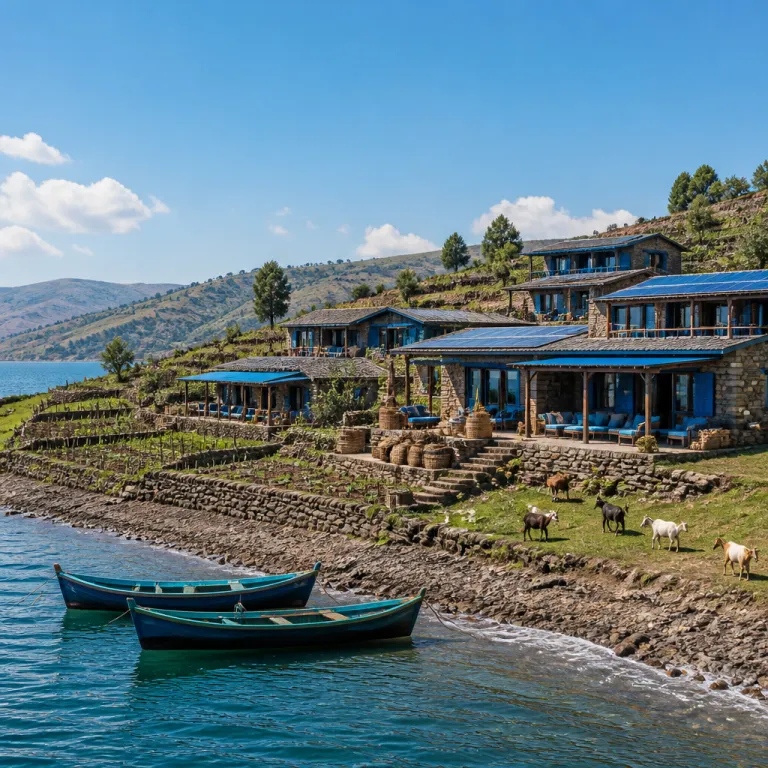
How community-owned lodges are reshaping luxury travel in Ethiopia
In Ethiopia, a new generation of community-owned lodge projects is quietly redefining luxury for serious travelers. Here, the measure of comfort is not only thread count and pool temperature but how directly your stay supports local people and protects the surrounding natural landscapes. This is where the idea of an Ethiopia community lodge for sustainable travel stops being a slogan and becomes a transparent economic model you can actually trace, even if the details vary from region to region.
Across the country, from the north around the Simien Mountains to the south near the Omo Valley, community lodges are owned by local communities rather than distant investors. Profits are shared through village cooperatives, which decide how tourism revenue funds schools, clinics, water points, or conservation in the nearby national park or protected area. For example, Chebera Safari Lodge reports that at least 40% of net operating surplus is earmarked for community projects through its cooperative structure (Chebera Safari Lodge Community Report 2023, “Community Ownership and Revenue Sharing at Chebera Churchura”). When you book one of these eco lodges, you are effectively buying a small share in long term sustainable tourism, not just a bed with great views.
Governance is usually handled by elected committees of local people, often supported by NGOs or regional tourism offices that provide training and financial oversight. These committees negotiate with private operators or management teams, ensuring that employment opportunities, guide contracts, and supply chains remain rooted in the community. In practice, that means the lodge chef buys vegetables from farmers in the valley, the park lodge hires trackers who grew up reading the local wildlife, and your payment for three days in the mountains national region circulates in the village economy rather than leaving Ethiopia. At the same time, community leaders and NGO partners acknowledge risks such as elite capture, uneven benefit sharing, or weak bookkeeping, which is why regular audits and public meetings are increasingly built into lodge agreements (see, for instance, Ethiopian Wildlife Conservation Authority, “Community-Based Tourism Governance Guidelines,” 2020).
From Addis Ababa to the Rift Valley lakes: where your stay funds real communities
Most journeys into this side of Ethiopian tourism begin in Addis Ababa, where specialist agencies now curate itineraries that prioritise community-owned lodge stays over anonymous resorts. They understand that the best way to experience Ethiopia community lodge sustainable travel is to move slowly, linking nights in eco lodges with guided walks, coffee ceremonies, and market visits hosted by local people. This is not charity tourism; it is a premium, deeply contextual way to travel that still expects high standards of comfort and service, while accepting that Wi-Fi speeds or hot water pressure may not always match big city hotels.
Head south from Addis Ababa and the landscape opens into the Rift Valley, where valley lakes such as Langano host properties like Hara Langano Eco Lodge that work closely with nearby villages. Here, your lakeside room looks across water rich with birdlife, while staff explain how lodge income supports local communities through schooling and small business grants. A short drive away, Aregash Lodge in Yirgalem offers another expression of sustainable tourism, with traditional architecture, organic gardens, and guided walks that highlight both flora and fauna and Sidamo coffee culture. According to Sidama regional tourism officers, more than 70% of Aregash Lodge’s permanent staff are recruited from surrounding kebeles, a pattern that is increasingly used as a benchmark for community-linked properties (Sidama Region Culture, Tourism and Sports Bureau, “Tourism Employment and Local Benefit Sharing in Sidama,” 2022).
Further along the valley, Dorze Lodge above the town of Dorze uses its hilltop position to frame some of the best views over the Rift Valley mountains and lakes. Nights here are about more than scenery, as we explain in our guide to luxury eco friendly hotels in Ethiopia, because the lodge was built with local materials by artisans whose weaving traditions shape both the interiors and the village economy. Every stay supports employment opportunities for weavers, guides, and cooks, while guests gain a textured understanding of how a community lodge can anchor sustainable tourism in one small corner of Ethiopia. Local cooperative leaders estimate that weaving orders linked to lodge tourism now account for roughly a quarter of annual cash income in some households (Dorze Weavers’ Association, “Annual Income and Orders Survey,” 2021).
Northbound: community lodges, mountains, and protected areas
Travel north and the conversation around Ethiopia community lodge sustainable travel becomes even more tightly linked to conservation. In the highlands near Lalibela, Degosach Eco Lodge sits about 22 km outside town, giving guests a quiet base with sweeping views over a rugged valley and terraced fields. Here, the eco lodge model is fused with community ownership, so the same local people who guide you to rock hewn churches also sit on the committee that decides how tourism revenue supports reforestation and trail maintenance. A 2020 monitoring report by the Amhara Culture and Tourism Bureau notes that Degosach-related tourism income funded the planting of more than 15,000 indigenous tree seedlings over three years along community-managed footpaths (Amhara Culture and Tourism Bureau, “Degosach Eco Lodge Impact Assessment,” 2020).
Across the Simien Mountains, properties such as Limalimo Lodge have helped set expectations for how high end eco lodges can operate beside a national park without overwhelming it. While Limalimo Lodge is not fully community owned, it works closely with local communities on guide training, waste management, and low impact building techniques that respect the fragile mountains national ecosystem. Guests wake to views of gelada baboons on distant cliffs, knowing that park fees and lodge partnerships contribute to protecting this UNESCO listed protected area for future generations. Park authorities have highlighted Limalimo’s greywater system and restrictions on vehicle use as examples of how private operators can reduce pressure on popular viewpoints (Simien Mountains National Park Management Plan 2017–2027, Ethiopian Wildlife Conservation Authority).
Our analysis in why Ethiopia’s eco lodge generation will outlast the COP32 hotel boom shows how this northern corridor, from the Simien Mountains to the churches of Lalibela, is becoming a testing ground for serious sustainable tourism. The same pattern is emerging in the Bale Mountains to the southeast, where community linked park lodge projects support rangers, trail crews, and research on endemic flora and fauna. In both regions, the most thoughtful lodges treat every guest stay as a micro investment in conservation, rather than a simple transaction for a few days of mountain air, while also grappling with challenges such as fluctuating visitor numbers and the cost of maintaining remote infrastructure.
Southbound: Omo Valley, wildlife, and community stakes in tourism
In the Omo Valley, the stakes around Ethiopia community lodge sustainable travel are different, because culture rather than altitude is the main draw. Here, lodges such as Kizo Lodge in Turmi position themselves as bridges between guests and local communities, not as cultural theme parks. The property supports employment opportunities for young people from nearby villages, while carefully curated visits ensure that tourism does not reduce complex identities to quick photo stops. As one Nyangatom elder quoted in a 2021 NGO field report put it, “tourists should come to listen, not to collect us like pictures” (Pastoralist Concern Ethiopia, “Tourism, Identity and Consent in the Lower Omo,” 2021).
Community owned or community supporting lodges in the wider Omo Valley work with elders to design visit schedules, set fair compensation, and agree on how tourism income is shared between households. This governance structure matters, because it determines whether tourism becomes a source of tension or a shared asset that funds water projects, schools, and health posts. When you stay three or four days in a lodge that is transparent about these agreements, you can ask precise questions about who benefits, how decisions are made, and what role local people play in guiding and storytelling. Field studies by the Ethiopian Wildlife Conservation Authority (EWCA, “Community-Based Tourism and Conflict Mitigation in the Omo Valley,” 2020) note that villages with written tourism agreements report fewer conflicts over visitor payments than those relying on informal arrangements.
Wildlife still features in this southern circuit, especially in nearby national park areas where eco lodges operate game drives or river trips, but the emphasis is on context rather than checklist sightings. Guides explain how climate shifts, upstream dams, and changing grazing patterns affect both wildlife and human communities, situating your stay within the broader story of East Africa’s evolving river valleys. In this way, a night in an Omo Valley lodge becomes a seminar in sustainable tourism, where the classroom is a riverside fire and the lecturers are the people whose land you are crossing. At the same time, community representatives and researchers warn that without careful visitor management, even well-intentioned cultural encounters can fuel dependency or stereotype local groups, a tension that responsible lodges now discuss openly with guests.
Chebera, Bale, and beyond: when conservation and comfort align
Some of the most compelling examples of Ethiopia community lodge sustainable travel now sit on the edge of lesser known parks, where visitor numbers remain low and impact is easier to manage. Chebera Safari Lodge, for instance, operates inside Chebera Churchura National Park under a community owned model that links every guest night to local conservation funding. Here, the park lodge employs residents as rangers, trackers, and hospitality staff, turning wildlife knowledge into salaried work that competes with charcoal burning or unsustainable grazing. Lodge management reports that more than 80% of its staff are drawn from surrounding communities, and that community-linked conservation payments have helped finance at least three new ranger posts since 2019 (Chebera Safari Lodge Community Report 2022, “Employment, Revenue and Conservation Outcomes”).
In the Bale Mountains, a mosaic of eco lodges and community guesthouses supports one of Ethiopia’s most important protected areas, home to Ethiopian wolves and high altitude flora and fauna found nowhere else in East Africa. Properties around the Harenna Forest and Sanetti Plateau often use hydro or solar power, limit water use, and design trails that keep pressure off sensitive breeding grounds. Guests who stay several days quickly see how sustainable tourism can underwrite both scientific research and practical infrastructure, from ranger posts to school roofs in nearby villages. A joint EWCA–Frankfurt Zoological Society briefing from 2021 estimates that tourism-related fees and lodge partnerships now cover roughly a third of Bale Mountains National Park’s annual operational budget (EWCA & Frankfurt Zoological Society, “Bale Mountains National Park: Tourism Revenue and Conservation Finance,” 2021).
Even in extreme landscapes such as the Danakil Depression, where tourism remains highly specialised and conditions are harsh, the same principles are starting to guide lodge planning and camp operations. Operators are working with local people to ensure that guiding, transport, and security roles are fairly paid and locally sourced, rather than imported from Addis Ababa. For travelers, the message is clear; the best lodges in Ethiopia are those where comfort, safety, and service are matched by a credible plan for keeping the surrounding natural and cultural environment intact, and where managers are honest about limits, from water scarcity to the difficulty of enforcing environmental rules in remote areas.
How to read sustainability claims when booking your stay
For a traveler trying to book intelligently, the phrase Ethiopia community lodge sustainable travel can feel vague until you start asking sharper questions. The first distinction to make is between an eco lodge that focuses on green building and energy, and a community owned lodge where local people hold equity and decision making power. Both models can be valuable, but only the second guarantees that a meaningful share of profits stays in the valley, the lakes region, or the mountains where you are sleeping, and even then you should ask how those profits are distributed between households and community projects.
When you browse lodge websites or speak with agents in Addis Ababa, look for clear explanations of ownership, not just lists of eco features like solar panels or organic menus. Ask how many staff come from local communities, what percentage of revenue is reinvested in the nearby national park or protected area, and whether there is a formal agreement with village councils. Serious operators will be able to explain how they support employment opportunities, training, and small business development for farmers, guides, and artisans in plain language, not marketing jargon. If answers are vague, or if managers cannot describe specific projects funded in the last year, that is a useful warning sign that sustainability language may be outpacing reality.
Another useful test is to examine how a lodge structures guest experiences with wildlife, cultural visits, and excursions into fragile landscapes such as the Simien Mountains, Bale Mountains, or the Danakil Depression. Are group sizes kept small, are local guides leading, and are there clear codes of conduct that respect both people and place during your days on the ground? Our deep dive into Lake Tana’s high end eco resort pipeline, including the Felege Gion Bahir Dar project, unpacks these issues in detail at what it signals for Lake Tana’s luxury future. In every case, the lodges that pass these tests are the ones where your stay genuinely funds local livelihoods rather than just borrowing the language of sustainability, and where managers are open about ongoing challenges such as staff turnover or balancing conservation rules with community needs.
Key figures: community-owned lodges and sustainable tourism in Ethiopia
- There are currently six recognised community owned lodges operating in Ethiopia, a small but significant cluster that anchors sustainable tourism in multiple regions across the country (Chebera Safari Lodge Community Report 2022; Ethiopian Wildlife Conservation Authority, “Community-Based Tourism Pilot Sites in Ethiopia,” 2021). Definitions vary between agencies, so some mixed-ownership eco lodges are not included in this tally.
- These six lodges work year round, which means twelve months of stable employment for staff drawn largely from nearby villages, rather than only seasonal jobs tied to peak tourism days. Across the group, internal reports suggest that more than 150 full time positions are directly linked to community lodge operations (EWCA, “Employment and Livelihoods in Community Tourism Enterprises,” 2021).
- Each community lodge typically partners with local government agencies and NGOs, creating multi stakeholder governance structures that help align conservation goals with economic development for local people. In Chebera Churchura, for example, quarterly review meetings bring together lodge managers, community representatives, and park staff to track spending and address grievances (Chebera Churchura National Park–Community Joint Management Minutes, 2019–2022).
- By focusing on traditional architecture and local materials, community lodges reduce construction related emissions and channel building budgets directly into village economies, rather than importing prefabricated structures from outside Ethiopia. A 2020 assessment of Degosach Eco Lodge found that more than 60% of its initial construction budget was spent within a 30 km radius of the site (Amhara Culture and Tourism Bureau, “Degosach Eco Lodge Impact Assessment,” 2020).
- Because community lodges are embedded near national parks and protected areas, they act as frontline contributors to wildlife monitoring and habitat protection, turning guest fees into predictable conservation funding streams. EWCA estimates that community-linked tourism now contributes between 10% and 20% of annual operational funds in selected pilot parks, including Bale Mountains and Chebera Churchura (Ethiopian Wildlife Conservation Authority, “Protected Area Financing and Tourism Revenue,” 2021).
FAQ: community-owned lodges in Ethiopia
What are community-owned lodges in Ethiopia?
Community owned lodges in Ethiopia are properties where local communities hold ownership stakes and participate directly in management decisions. They differ from conventional eco lodges because profit sharing, governance, and long term planning are anchored in village cooperatives or community associations. This structure ensures that tourism revenue supports local livelihoods, cultural preservation, and nearby conservation projects, while also exposing communities to business risks such as fluctuating visitor numbers or unexpected maintenance costs.
How do these lodges benefit local communities?
These lodges provide employment and support local economies. Jobs range from guiding and hospitality roles to construction, transport, and supply contracts for farmers and artisans. Because profits are shared through community structures, income from your stay can fund schools, clinics, water systems, and conservation work in adjacent national park or protected area landscapes. In Bale, for instance, lodge-linked community funds have helped finance classroom repairs and basic medical equipment in several highland villages (EWCA & Frankfurt Zoological Society, “Bale Mountains National Park: Tourism Revenue and Conservation Finance,” 2021).
Are community-owned lodges in Ethiopia eco-friendly?
Yes, they often use sustainable practices. Many community lodges in Ethiopia integrate solar power, rainwater harvesting, waste separation, and low impact architecture that blends with the natural environment. The most advanced properties also manage visitor numbers and activities carefully, protecting wildlife, flora and fauna, and cultural sites from overuse. However, park authorities and NGOs note that not every lodge meets the same standard, which is why independent audits and clear environmental management plans are increasingly encouraged (Ethiopian Wildlife Conservation Authority, “Environmental Standards for Tourism Facilities in Protected Areas,” 2020).
Can tourists participate in community activities during their stay?
Yes, many lodges offer cultural experiences. Guests are often invited to join coffee ceremonies, market visits, weaving demonstrations, or village walks led by local people who explain traditions in their own words. These activities are usually designed in consultation with community leaders, ensuring that participation is respectful, fairly compensated, and aligned with local expectations. Travelers are also encouraged to follow agreed guidelines on photography, gift giving, and dress, which helps avoid misunderstandings and supports long term relationships between hosts and visitors.
How can I book a stay at these lodges?
You can contact the lodges directly through their websites or work with specialist Ethiopian travel agencies that prioritise community owned properties. When booking, ask explicit questions about ownership, employment, and conservation contributions so you can be confident that your stay aligns with your sustainable tourism values. Transparent answers are a strong indicator that the lodge is genuinely community focused rather than using sustainability as a marketing label, and many operators are now willing to share summary figures or annual reports with interested guests.